- Mon- Fri: 8am-6pm
- Sat: 8am-5pm
- (250) 727-1948
- Greater Victoria BC

Mice tend to stay hidden, but the signs they leave behind are hard to ignore. Our team at PSI locates where mice are getting in, seals the entry points, and removes any that have already made their way inside, so the activity stops rather than continuing to build. Whether you are hearing movement in the walls or finding droppings in cabinets, the same approach applies.
Call (250) 727-1948 to schedule your inspection. Rapid-Response service is available across Greater Victoria to identify entry points and the steps needed to help keep mice out of the home.
When mice are active inside the home, calling for an inspection helps identify where they are entering and how the activity should be addressed. Scratching or light movement in walls, ceilings, or cabinets during the evening, along with small droppings near baseboards, cupboards, or stored food, are common signs that mice are moving through the home.
Addressing these signs early helps locate entry points and limit further mouse activity inside the home.
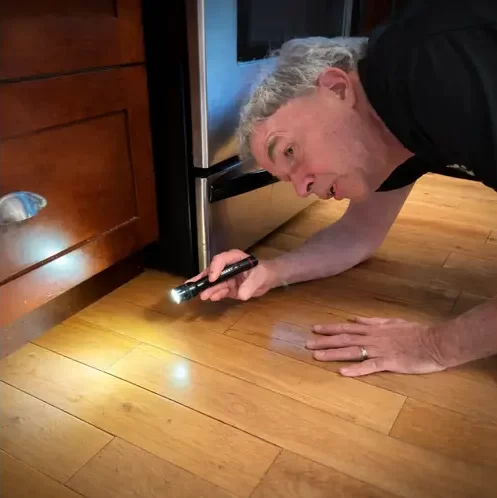
When our technicians arrive, the first focus is identifying where mice are entering the home and where movement is occurring within the structure. Droppings in cupboards or storage areas, light movement in walls or ceilings, or activity near food storage often help indicate where mice are travelling or nesting.
Because every property presents different conditions, the inspection looks closely at kitchens, storage areas, attics, crawlspaces, and exterior access points around the structure. Small openings around foundations, vents, or utility lines can allow mice to move into hidden areas where they remain active without being easily noticed.
Once entry points and areas of activity are identified, appropriate measures are applied to limit further access into the home. Homeowners are then given a clear explanation of what was found and what conditions may allow mice to return if they remain unaddressed, along with steps that can help prevent future problems. This careful approach helps resolve the issue while making it easier to keep mice out of the home.
Mice tend to settle in areas that provide shelter and reliable access to food. Around residential properties, activity may begin in kitchens, pantries, storage rooms, garages, attics, or crawlspaces where nesting areas remain undisturbed.
Outdoor conditions can influence mouse activity around a home. Gardens, compost areas, stored materials, and dense vegetation sometimes provide cover where mice remain close to a structure.
From these areas, mice may reach entry points along foundations, rooflines, vents, or small gaps around pipes, wiring, and exterior doors. Once inside, mice can move through wall voids, ceiling spaces, cabinets, and small openings that connect different parts of the home.
Identifying where activity begins helps explain how mice are moving through the property and allows attention to focus on the source rather than scattered movement around the home.
For more than 30 years, Pest Scene Investigations has worked with homeowners across Greater Victoria to address pest activity in residential environments. With over 100,000 service visits completed, our licensed technicians understand how rodent activity develops in homes throughout the region.
Our work follows the standards of British Columbia’s Integrated Pest Management Act, and each technician is trained to work carefully around families, pets, and everyday living spaces. As Vancouver Island’s largest independent and locally owned pest control company, we serve communities from Sidney to Sooke and throughout the South Island with consistent service and practical guidance.
Safety remains central during every visit. Treatments are selected with consideration for living areas, storage spaces, and locations where children and pets spend time.
Our team explains what is being done and what to expect during and after service so homeowners remain informed throughout the process. Careful application and clear communication help ensure the household remains comfortable while the work addresses the activity.
Many homeowners want to understand how to reduce the chance of rodent activity returning. Additional resources are available through the Learning Centre, including preparation guidance, common questions, and prevention tips for homes across Greater Victoria.

These explain how to prepare your home for treatment and outline what to expect during the process.


Small droppings near baseboards, cupboards, or food storage are typically the first signs that mice are active inside a home. Gnaw marks on food packaging or stored materials are another indicator that activity is already established. Any of these signs is reason enough to book an inspection and confirm where the mice are entering.
Mice can fit through openings as small as a dime, which means gaps around foundations, vents, exterior doors, or utility lines are often enough to let them in. Once inside, they travel through wall voids, ceiling spaces, and cabinet openings until they reach food and nesting areas. An inspection identifies the specific entry points so they can be sealed as part of addressing the activity.
One mouse inside a home is rarely the full picture. Mice reproduce quickly, and a female house mouse can produce multiple litters throughout the year, meaning a small number inside a structure can grow considerably before the signs become obvious. Acting on a single sighting rather than waiting for more evidence is consistently the better outcome for homeowners.
Mice return because the entry points that allowed them in have not been sealed. Removing mice without addressing how they are getting into the home leaves access open, and new mice follow the same routes in. Locating and sealing those entry points as part of the removal process is what stops the cycle.
Yes, mice can cause damage inside walls that is more serious than the droppings or chewed packaging visible on the surface. Mice gnaw through wiring as they travel through wall voids and ceiling spaces, creating a fire risk that is not visible until an inspection traces where they have been moving. They also shred insulation for nesting, compounding the damage in areas of the home that are out of view.
House mice are present in Victoria year-round, but activity inside homes typically increases in autumn and through winter as mice move indoors seeking warmth. Victoria’s mild climate means rodent activity never fully stops the way it might further inland, which is part of why calls come in across all seasons. Homeowners who notice signs in late summer or early autumn are usually catching the start of that seasonal increase, and that is the right time to act.
Mice in Victoria homes are drawn primarily to food, which is why kitchens, pantries, pet food storage, and compost near the home are the most common starting points for activity. Once a mouse finds reliable access to food and a warm gap to nest in, it has little reason to leave. Removing those conditions, and sealing the entry points that provide access to them, is what makes the difference between a temporary fix and a lasting one.
After a mouse removal visit, the technician will explain what was found, where activity was identified, and what to watch for in the days that follow. The practical signs that activity has stopped are the absence of fresh droppings, sounds in the walls, or new gnaw marks. If signs continue or reappear, calling the team back to reassess is the right next step.
PSI serves communities across the south island, from Sidney and the Saanich Peninsula through Greater Victoria and out to Sooke, along with the Gulf Islands and the Nanaimo area. Mice are active in urban homes, older character properties, and rural outbuildings throughout this region. The same licensed team responds across the full service area.
Over 30 years of pest control work in Greater Victoria and more than 100,000 service visits mean the team has seen how mouse activity develops across the full range of homes and properties on the south island. PSI operates under BC’s Integrated Pest Management Act and is Vancouver Island’s largest independent and locally owned pest control company. Local experience and local accountability are what separate a visit that fully resolves the problem from one that only slows it down.